Product

AI servers, HPC, and 5G/6G technologies are driving increased demands on semiconductor testing, including higher pin counts, finer pitches, higher-speed signal transmission, and greater current-carrying capability.
FICT provides industry-leading Space Transformer (ST) Boards and Main Boards that meet the advanced requirements of next-generation semiconductor testing.


ST Board
 Why FICT
As AI servers, HPC, and 5G/6G technologies continue to evolve, probe cards require higher pin counts, finer pitches, faster signal transmission, and greater current-carrying capability.
Backed by decades of PCB technology expertise and proven manufacturing experience, FICT delivers highly reliable Space Transformer (ST) Board solutions for advanced probe card applications, including MEMS probe cards.
 Main Features of ST Boards
01
Fine Pitch
As advanced chiplets and 2.5D/3D packaging technologies become more widespread, probe card boards are required to support increasingly finer pitches.
Key Features
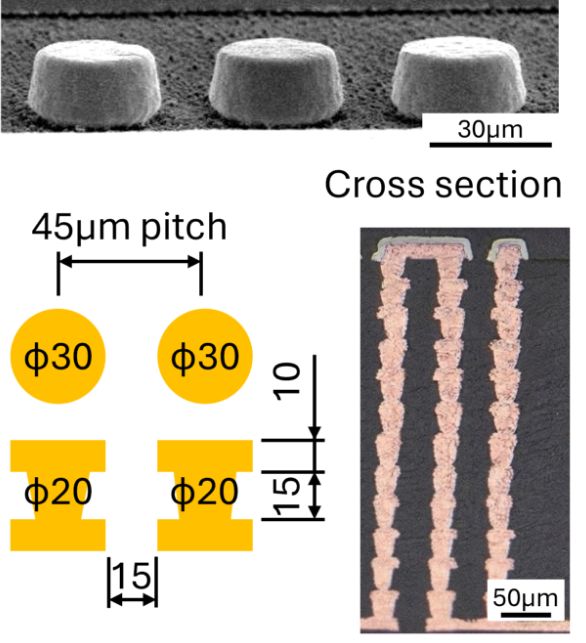
- Supports 45 μm DUT pitch mass production
(20 μm pitch under development) - Laser via pad diameter: 30 μm, via diameter: 20 μm
Technology Highlights
High-density routing is achieved through thin build-up materials and advanced micro-laser processing technology. The use of low-CTE substrates minimizes positional deviation caused by thermal expansion, improving both CTE and thermal cycle reliability.
02
High Pin Count
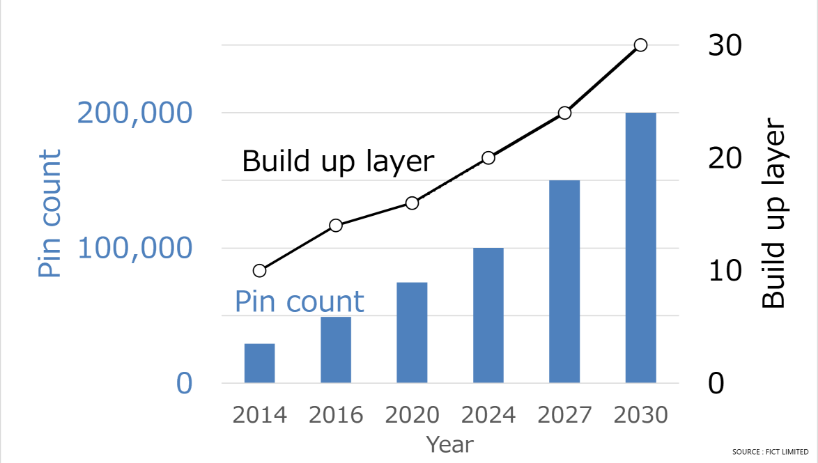
FICT supports up to 100,000 pins and is developing technologies to enable 200,000-pin probe card solutions for next-generation semiconductor testing.
Technology Highlights
Increased build-up layers and high-density routing technologies enable ultra-high pin count designs. Supports large-scale devices and high-I/O applications.
03
High-Speed Signal Transmission Solutions
FICT supports high-speed signal transmission through advanced materials and manufacturing technologies.
Key Features
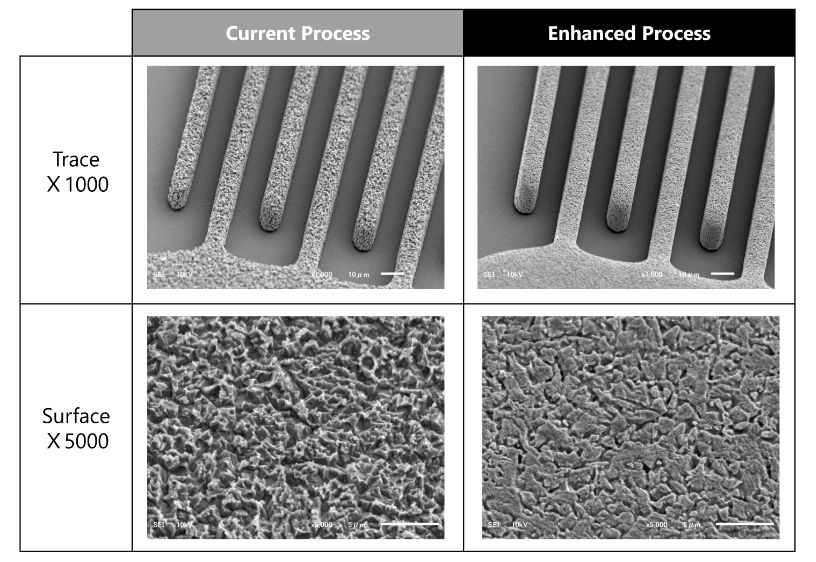
- Reduced transmission loss through signal-pattern surface smoothing technology.
- High-speed signal transmission enabled by low-loss dielectric materials.
Technology Highlights
For high-speed signal applications, FICT achieves excellent transmission performance through conductor surface smoothing technology and the application of low-loss dielectric materials. These technologies help minimize transmission loss and support stable high-speed transmission.
04
High-Current & Thermal Management Solutions
To support the increasing power demands of next-generation devices, FICT provides advanced PCB technologies that combine high current-carrying capacity with superior thermal management performance.
Key Features
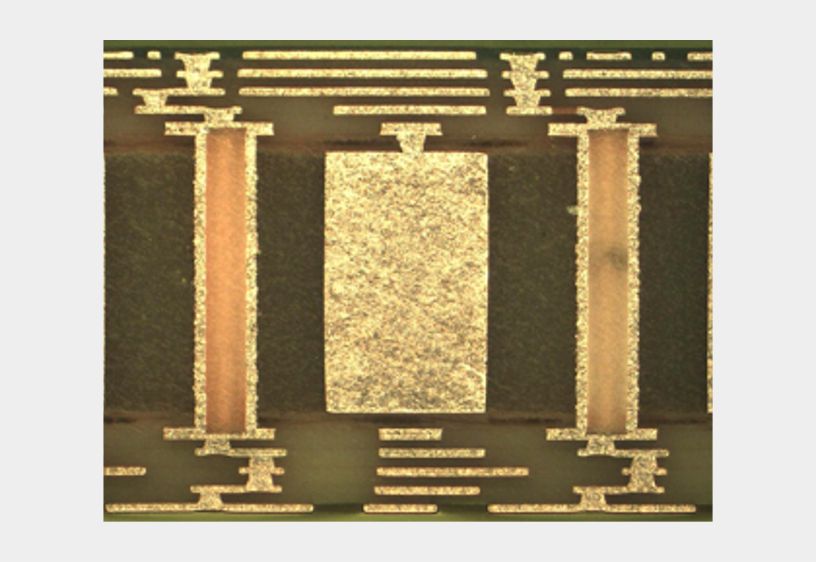
- High-current capability enabled by thick copper core structures
- Enhanced thermal management through low thermal resistance design
- Stable operation and improved reliability through superior current-carrying capacity and heat dissipation performance
Technology Highlights
FICT's thick copper core technology increases current-carrying capacity while reducing thermal resistance. Combined with advanced thermal management design, it enables efficient heat dissipation and contributes to the stable operation of high-performance devices and power electronics applications.
 Next-Generation ST Boards Enabled
by Our Proprietary F-ALCS Technology
As probe cards continue to require higher density and finer pitch designs, circuit boards must provide increasingly greater wiring capacity. As a result, an increase in build-up layers and greater substrate complexity have become key industry challenges.
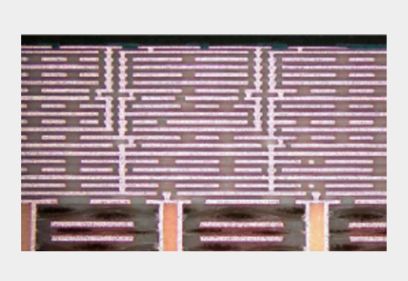
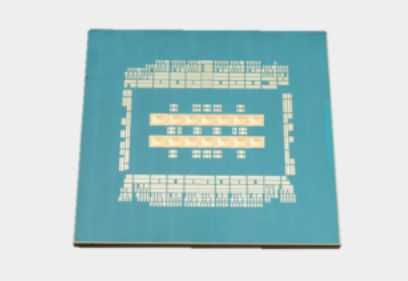
FICT's proprietary F-ALCS technology dramatically improves wiring density in the core layer, enabling both high-density routing and greater design flexibility. By optimizing the number of build-up layers, F-ALCS supports the high-density, fine-pitch requirements demanded by next-generation probe cards.
Key Features of F-ALCS
- Supports high pin-count and fine-pitch designs through superior routing density.
- Reduces manufacturing processes by up to 50% using a one-time lamination method.
- Optimizes the number of build-up layers through increased routing capacity in the core layer.
- Improves high-speed signal transmission performance through a stacked-via structure.
- Enables high-density substrate designs for next-generation semiconductor testing applications.
Example
 The Technology Behind FICT's ST Boards
FICT's ST boards are built on FC-BGA substrate technology that has been continuously refined since its development in 2001. By leveraging this expertise in the probe card market, we provide high-performance ST boards designed to meet increasingly demanding requirements for miniaturization, higher functionality, and high-speed data transmission.
Discover the history behind these innovations and learn about FICT's ongoing commitment to technological advancement through discussions with our engineering team.


We developed the base of the Semiconductor Packaging Substrate
Meet our members bringing insightful information and little-known anecdotes about the Semiconductor Packaging Substrate World.
 Related technologies
Main Board
 Advanced Main Board Technologies
As next-generation DRAM and AI semiconductors continue to advance in performance, main boards are increasingly required to support ultra-high layer counts, high routing density, and high-speed signal transmission. Leveraging decades of PCB technology expertise, FICT provides advanced main board solutions that meet these evolving requirements.
 All-Layer Z-Connection Structure Board to Board Connection Technology
All-Layer Z-Connection Structure Board to Board Connection Technology
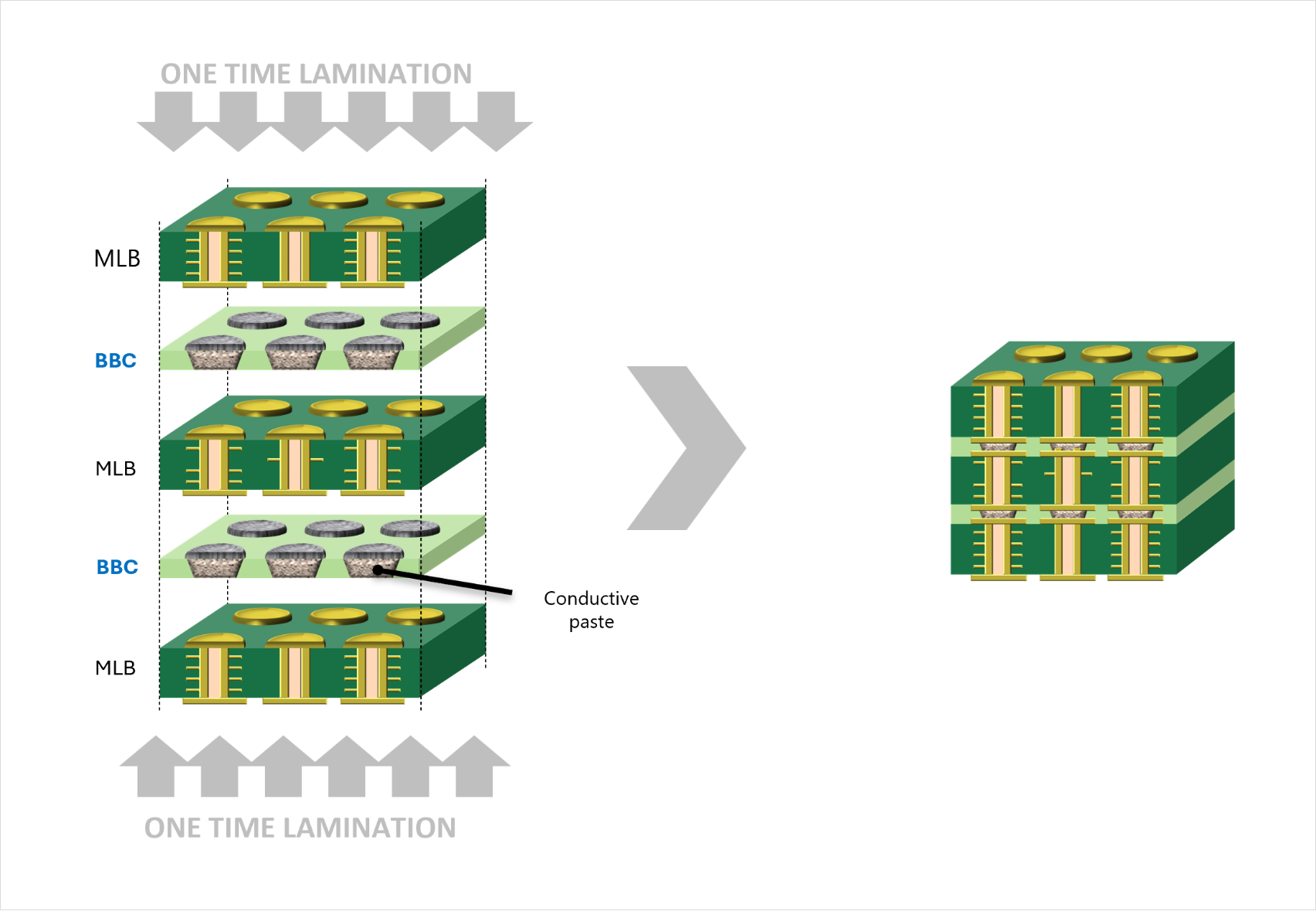
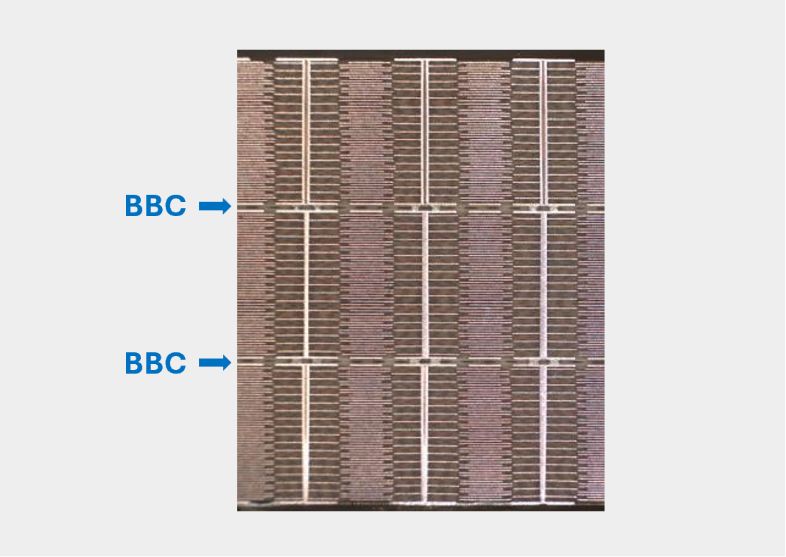
As high-end DRAM testing continues to demand increasing layer counts, conventional PCB technologies face critical limitations due to aspect ratio constraints and material handling difficulties. To address these challenges, FICT has developed ALCS-BBC technology. Unlike traditional methods, ALCS-BBC directly connects Boards together. This innovative structure makes it possible to achieve extremely high aspect ratio connections--such as
AR66--and enables ultra-thick, high-layer-count designs, including structures with up to 160 layers and 10 mm thickness, surpassing the boundaries of conventional multilayer PCB technologies.
Example
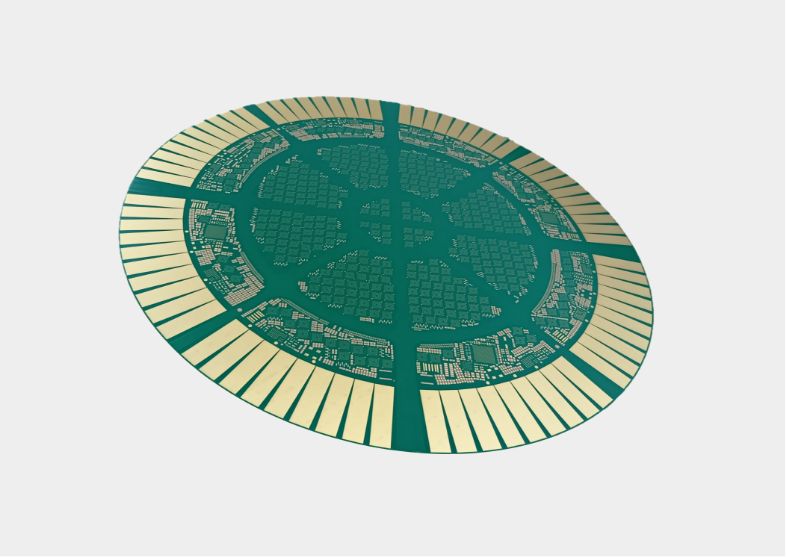
 Outline of PCB Specifications
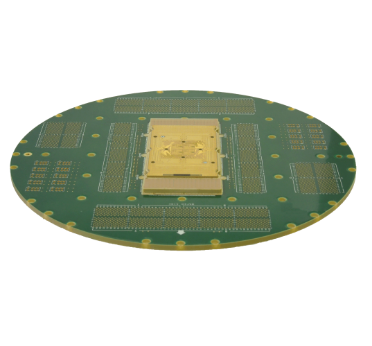
Organic PCB applications for probe card and its PCB specifications.
01
Organic Probe Card for Flash memory
| Layer Construction | 57 Layers (F-ALCS Technology) |
|---|---|
| PCB Size, Thickness | φ480mm, 6.2mm |
02
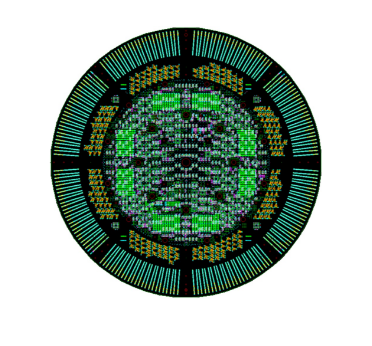
Organic Probe Card for DRAM Memory
| Layer Construction | 112 Layers |
|---|---|
| PCB Size, Thickness | φ520mm, 7.4mm |
03
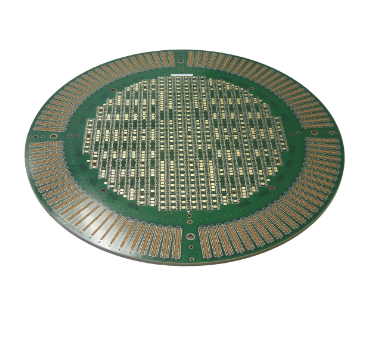
Organic Probe Card for Logic LSI
(Interposer Type, Multi Layer Organic PCB)
(Interposer Type, Multi Layer Organic PCB)
| Layer Construction | 42 Layers (7+28(F-ALCS)+7) |
|---|---|
| PCB Size, Thickness | 100×100mm, 2.7mm |
04
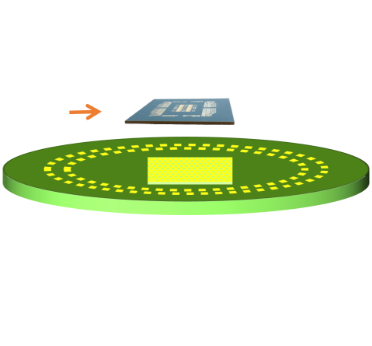
Organic Probe Card for Logic LSI
(Interposer Integrated Type)
(Interposer Integrated Type)
| Layer Construction | 76 Layers ((11-14-11)+40) |
|---|---|
| PCB Size, Thickness | φ280mm, 9.56mm |


Advanced Technologies
Back to top
Product
Back to top
Solution Services
Back to top
Technical Service
Back to top